
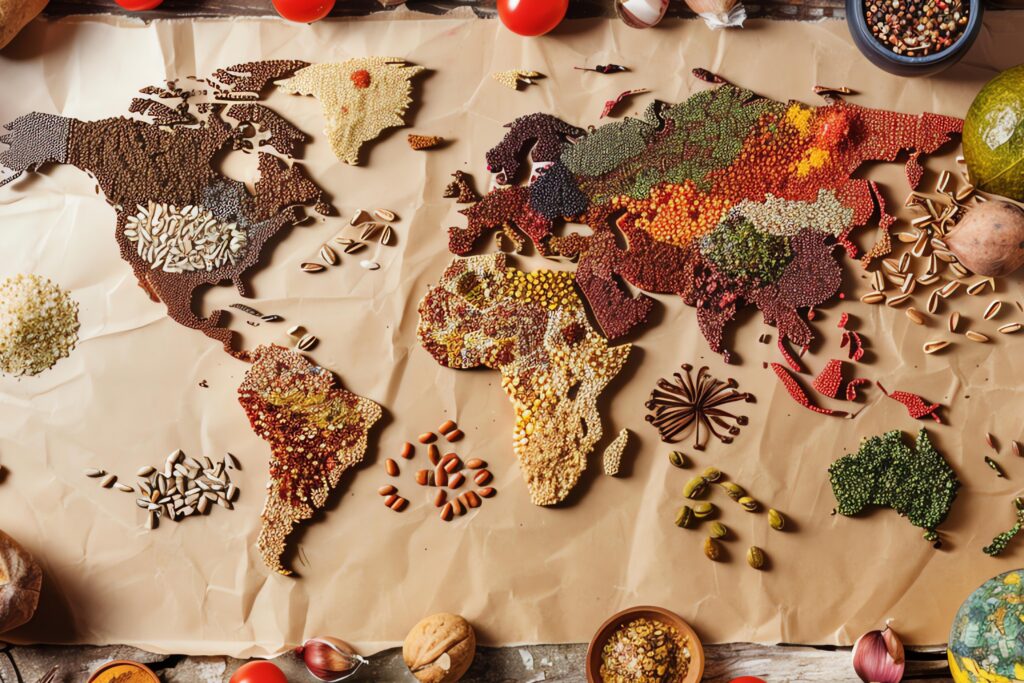
When buyers hear “imported,” two assumptions usually follow: it’s cheaper, and it’s riskier. Neither tells the full story. In international ingredient sourcing, getting the right spice or ingredient, at the right quality, on time, depends not just on where it’s grown, but on who sources it and how.
To show what that takes, we drew on the experience of Jen, our Executive Vice President, and Christian, our Director of Procurement.
How Long Has St. Charles Trading Been Sourcing Ingredients Globally?
St. Charles Trading has sourced domestic and international ingredients for more than 27 years, and many of our supplier relationships span nearly that long. That experience has taught us something every buyer should know: origin matters. Climate, soil, growing seasons, and local processing make certain regions better suited to specific crops, flavor profiles, and volumes. The same spice from two origins, for example, can vary noticeably in color, aroma, and flavor strength. Knowing which origin fits which need is a big part of what we do.
Over the years, we’ve also heard plenty of misconceptions about international sourcing. Here are the two most common.
Myth #1: Imported Spices and Ingredients Are Lower Quality
Quality isn’t determined by country of origin. It’s determined by how an ingredient is sourced, vetted, and verified, and that’s where St. Charles Trading sets itself apart as a food ingredient supplier.
- Direct-from-origin sourcing: We work directly with growers and processors, with no brokers in between.
- Supplier vetting: Every supplier is evaluated before they ship to us.
- Third-party audits: Independent audits confirm suppliers meet the standards they claim.
- Pre- and post-shipment testing: Product is tested before it leaves origin and again when it arrives.
- Full traceability: We can follow an ingredient from its source to your dock.
- Standards above the minimum: Regulations set the floor, and our practices go beyond it.
Together, these steps mean quality comes from the process, not the place. Every ingredient we import goes through the same checks, so you get consistent quality shipment after shipment, no matter where it was grown.
Myth #2: Importing Food Ingredients Is Simple and Cheap
Importing can look like placing an order and waiting. In reality, buyers sourcing on their own face:
- Weather that affects yields and quality
- Price volatility in global commodity markets
- Lead times of 3 to 6 months
- Freight challenges, from booking containers to weeks of ocean transit to port delays caused by congestion or dock strikes
- Geopolitical issues that disrupt shipping and trade
- Customs holds and inspections that delay shipments, with exam and storage fees adding up while product sits at the port
- Tariffs that change with little notice
- Regulatory changes at home and abroad
St. Charles Trading absorbs much of that complexity. We manage the logistics, keep inventory on hand, and maintain long-standing supplier relationships, so your supply stays steady and your pricing stays more predictable, even when global markets aren’t.
Why Does Experience Matter When Choosing an Ingredient Supplier?
When markets are calm, almost any supplier can deliver. The difference shows up when supply tightens, prices spike, or a shipment stalls. Sourcing reliably, year after year, takes decades of groundwork. Our experience gives customers:
- Supplier relationships that provide priority and stability when supply tightens
- Knowing which suppliers can be trusted, and which can’t
- Deep knowledge of global markets and what moves them
- Guidance through shortages and market shifts, so you can plan ahead instead of react
Choosing the Right Global Ingredient Sourcing Partner
Global ingredient sourcing is about more than finding an ingredient overseas. It’s knowing where to source it, who to trust, and how to keep quality and supply steady when markets shift. For more than 27 years, St. Charles Trading has been a trusted wholesale spice supplier and food ingredient distributor, sourcing bulk spices, seasonings, and ingredients directly from origin. We support food manufacturers with custom seasoning blends, R&D, co-packing, warehousing, and logistics. Tell us what you need, and we’ll help you.
Frequently Asked Questions
What international ingredients does St. Charles Trading supply?
Key international ingredients include garlic, onion, black pepper, white pepper, salt, paprika, ground red pepper (in a range of SHU heat levels), ginger, cumin, turmeric, jalapeño, cinnamon, chili powder, coconut sugar, lupin, and parsley.
How does St. Charles Trading ensure the quality of imported ingredients?
St. Charles Trading vets every supplier, requires third-party audits, tests product before and after shipment, maintains full traceability, and holds standards above regulatory minimums.
How long does it take to import food ingredients?
International lead times typically run 3 to 6 months. St. Charles Trading keeps inventory on hand so customers aren’t left waiting on every shipment.
Does St. Charles Trading offer blending and co-packing?
Yes. St. Charles Trading offers both, so customers can go from raw ingredients to finished product with one partner.
- Blending combines ingredients, such as spices and seasonings, into a custom mix made to your specifications, consistent batch after batch.
- Co-packing means we produce and package products on your behalf, often under your brand, so you don’t need your own production equipment or facility.
Can St. Charles Trading help develop or improve a product?
Yes. The St. Charles Trading R&D team works with customers on:
- Formulation: developing new products or blends from concept to final recipe.
- Reformulation: updating an existing product to cut costs, swap ingredients during shortages, or meet new nutritional or labeling goals.
- Reverse engineering: analyzing an existing product to recreate or closely match its flavor, color, and performance.